
 Analysis Overview
HJ Shipbuilding & Construction conducted an analysis based on internationally recognized climate scenarios to systematically identify physical and transition risks arising from climate change and establish proactive response strategies. In particular, to assess the financial and non-financial impacts of climate change on the Company, the analysis referred to the Shared Socioeconomic Pathways (SSP) scenarios presented in the Sixth Assessment Report (AR6) of the Intergovernmental Panel on Climate Change (IPCC). Through this scenario analysis, HJ Shipbuilding & Construction identified risks and opportunities associated with various climate change pathways and developed corresponding response strategies. Going forward, the Company plans to further strengthen its sustainable management system by comprehensively considering policy and market changes associated with the transition to a low-carbon economy (transition risks), as well as physical risks such as extreme weather events and sea-level rise.
 Climate Change Hazard List
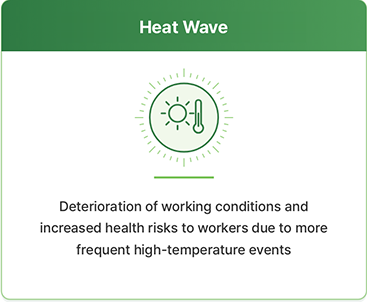
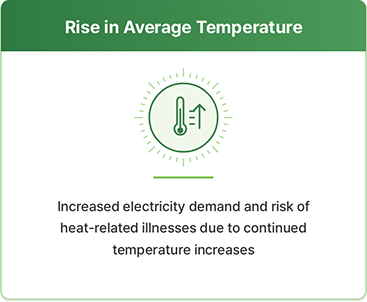
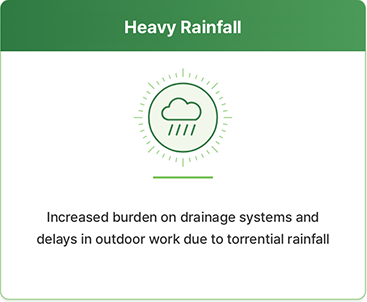
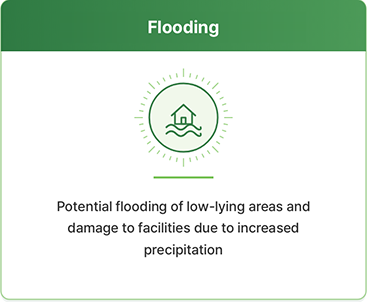
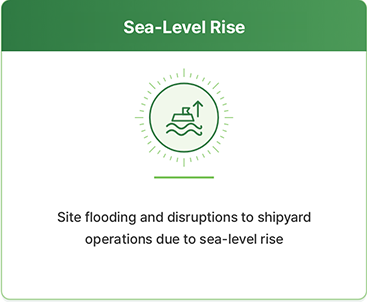
The Company classifies the types of climate-related hazards that may affect its business activities as shown below, analyzes their potential impacts on the Company, and establishes corresponding response strategies.
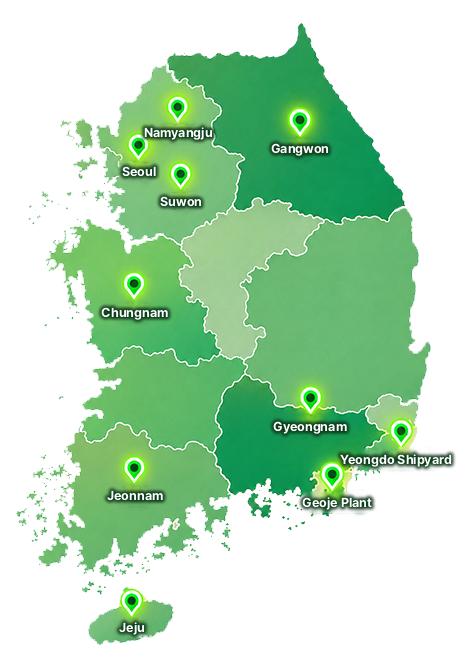
 Results of Physical Climate Risk Assessment by HJ Business Site
| Category | Heat Wave | Rise in Average Temperature | Heavy Rainfall | Flooding | |||||||||
|---|---|---|---|---|---|---|---|---|---|---|---|---|---|
| Short term | Medium term | Long term | Short term | Medium term | Long term | Short term | Medium term | Long term | Short term | Medium term | Long term | ||
| Shipbuilding | Yeongdo | ||||||||||||
| Geoje | |||||||||||||
| Construction | Gangwon A | ||||||||||||
| Gangwon B | |||||||||||||
| Seoul | |||||||||||||
| Namyangju | |||||||||||||
| Suwon | |||||||||||||
| Chungnam A | |||||||||||||
| Chungnam B | |||||||||||||
| Jeonnam | |||||||||||||
| Jeju | |||||||||||||
| Gyeongnam | |||||||||||||
Physical Risks and Financial Impact
HJ Shipbuilding & Construction separately analyzes physical and transition risks to systematically respond to risks arising from climate change. Physical risks are further classified into acute risks (heat waves, typhoons, and torrential rainfall) and chronic risks (sea-level rise and changes in precipitation patterns), with tailored response strategies established for each risk type. In particular, the Company has established phased response guidelines for acute risks such as heat waves and implements measures to protect the working environment.
Based on the results of its climate change scenario analysis, the Company also estimates risk management costs and incorporates the necessary budgets to proactively address potential risks. In addition, the Company minimizes financial losses by maintaining insurance coverage against facility damage and construction delays and operating a prevention-focused management system. It will continue to strengthen its response capabilities to ensure business continuity and protect workers and assets.
[Unit: KRW million]
| Category | Risk Type | Risk Impact | Potential Financial Impact | Risk Management Cost | Time Horizon | Response Strategy |
|---|---|---|---|---|---|---|
| Acute | Extreme weather events such as heat waves, typhoons, and torrential rainfall |
|
13,938 | 732 | Short term |
|
| Chronic |
|
|
37 | 16 | Long term |
|
Transition Risks and Financial ImpactTransition risks arising in the process of responding to climate change are major factors that affect the business environment due to rapid changes in policies, markets, and social reputation. Based on the classification framework recommended by the Task Force on Climate-related Financial Disclosures (TCFD), HJ Shipbuilding & Construction identified and analyzed transition risks across three areas. The Company identified risk factors that could have a material impact on its business by comprehensively considering factors such as linkages with the global supply chain and changing requirements of key stakeholders. The Company analyzes risk management costs and potential financial impacts for each transition risk and establishes corresponding response strategies. Through effective implementation of these strategies, the Company plans to continuously strengthen its risk management system.
[Unit: KRW million]
| Category | Risk Type | Risk Impact | Potential Financial Impact | Risk Management Cost | Time Horizon | Response Strategy |
|---|---|---|---|---|---|---|
| Policy |
Strengthening of greenhouse gas emission regulations (Designation/compliance under the GHG Target Management System and Emissions Trading Scheme) |
|
208 | 147 | Medium to long term |
|
| Market | Rising raw material costs |
|
23,846 | 180 | Medium term |
|
| Reputation | Growing media and stakeholder (client) attention to climate change issues |
|
68,200 | 1,820 | Short term |
|
Opportunities and Financial ImpactClimate change presents risks to companies, but it also creates opportunities to strengthen competitiveness by responding to emerging markets and technological changes. As the global transition toward carbon neutrality drives increasing demand for eco-friendly vessels, the Company plans to proactively respond to these trends to enhance both sustainability and profitability.
[Unit: KRW million]
| Category | Opportunity Type | Response Strategy | Potential Financial Impact | Opportunity Management Cost | Time Horizon | Expected Benefits |
|---|---|---|---|---|---|---|
| Products and Services |
Expansion of Eco-Friendly Construction/ Shipbuilding Markets |
|
882,821 | 1,112 | Medium term |
|
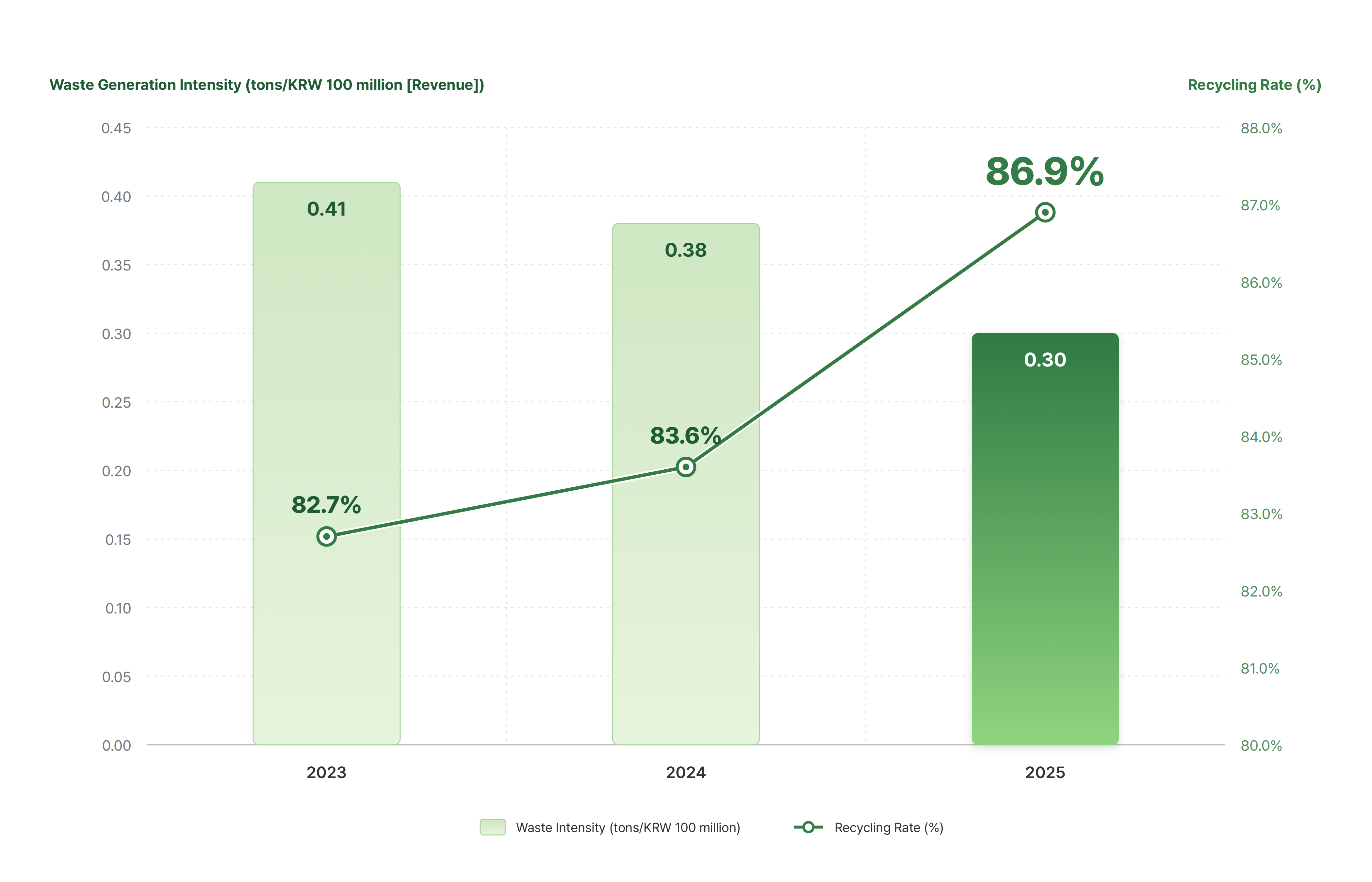
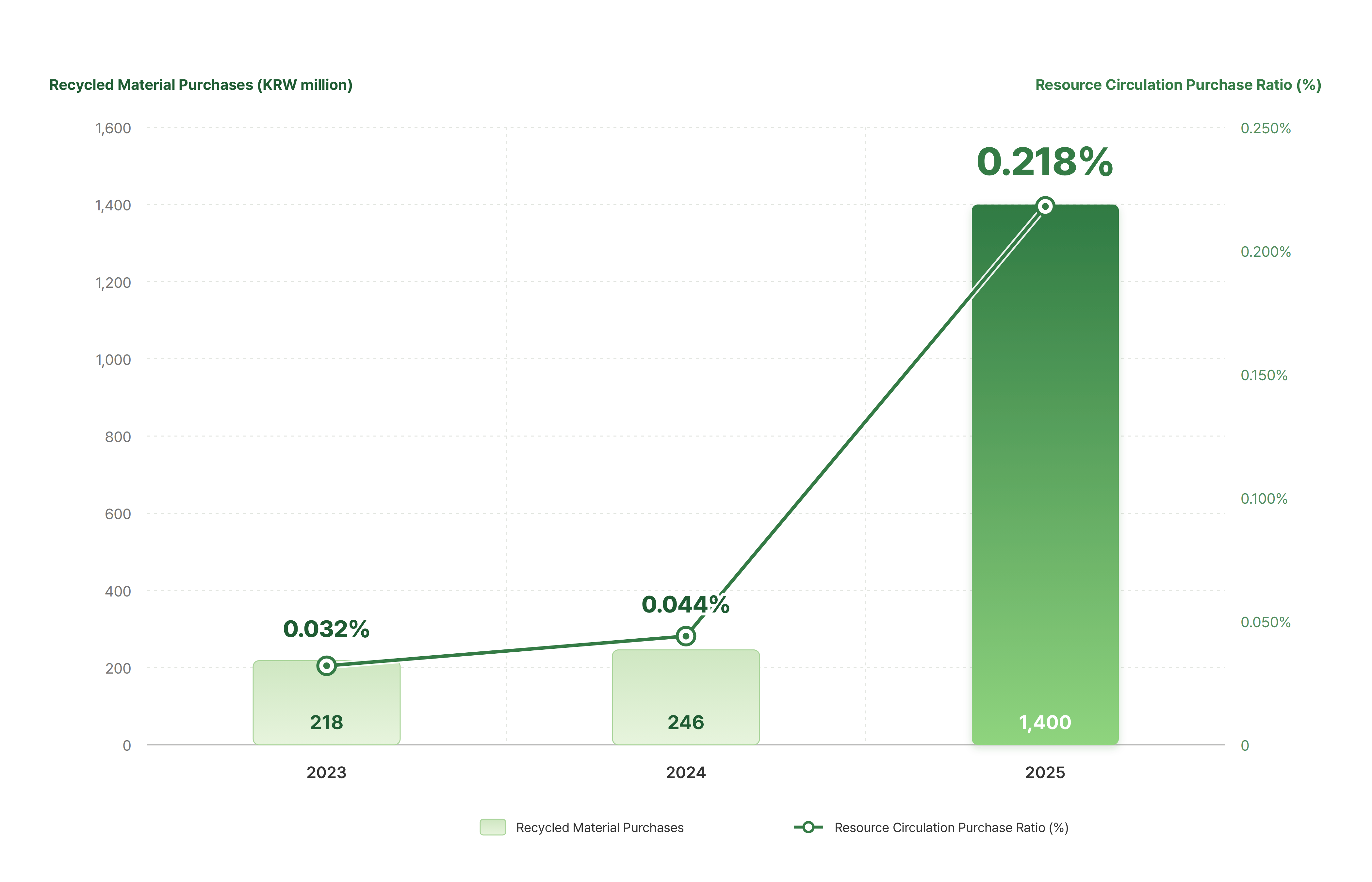
HJ Shipbuilding & Construction actively promotes resource circulation activities as part of its commitment to environmentally friendly management.
Rather than simply disposing of by-products and waste generated from construction and shipbuilding processes, the Company recycles them into high-value-added resources and actively uses various recycled materials, including recycled aggregate, recycled sand, and shot balls, across its construction and shipbuilding businesses. In particular, recycled aggregate and recycled sand are eco-friendly raw materials produced through sorting, crushing, washing, and other processes using concrete waste and construction debris generated from demolition work or construction sites. The Company applies stringent internal quality standards and actively uses these materials at many of its construction sites. Shot balls, which are recycled products made from scrap iron or metal scrap, are used in sandblasting (surface treatment) during shipbuilding to remove rust and foreign substances from hull surfaces and improve surface strength.
The Company also strictly manages waste throughout all stages, from generation to final treatment, in accordance with the Construction Waste Recycling Promotion Act and the Wastes Control Act. To increase the recycling rate and maximize resource circulation through continuous improvements in waste management, the Company has established internal procedures for the separate disposal and storage of waste, developed a “Waste Management Guideline,” and distributed it to all business sites for management and implementation by the dedicated environmental department at headquarters.
Through the gradual expansion of these resource circulation activities and waste recycling performance, HJ Shipbuilding & Construction will continue to conserve natural resources, reduce waste generation, lower carbon emissions, and play a leading role in establishing an eco-friendly industrial ecosystem.