HJ중공업


Status of Eco-Friendly Technologies

Construction Technology for Earth-Retaining Structures Using Cast-in-Place Piles and Precast Concrete Piles

  • This next-generation composite earth-retaining method overcomes the limitations of the conventional CIP method, achieving both improved construction efficiency and enhanced environmental performance.
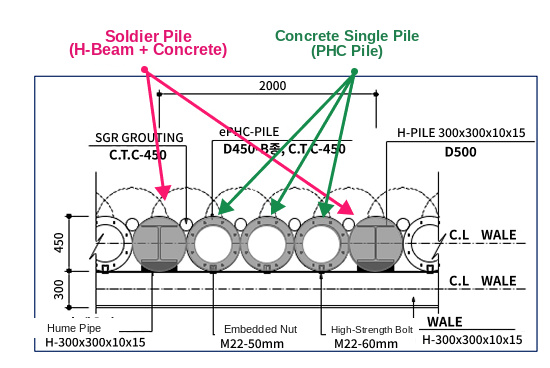
  • This technology is an improved composite earth-retaining method based on the conventional CIP (Cast-in-Place Pile) method. The wall is constructed by installing factory-manufactured PHC piles between soldier piles embedded with H-piles. The soldier piles (H-piles) facilitate the installation of walers while ensuring the integrity of the contiguous pile wall and providing resistance to lateral loads. The dry-wall elements (PHC piles) fundamentally address quality issues associated with the conventional CIP method, such as material segregation.
  • By using factory-manufactured PHC piles instead of cast-in-place piles, quality control is facilitated and concrete placement and curing work is substantially reduced, resulting in approximately 36% shorter construction time and approximately 31% lower costs compared with the conventional CIP method. This also enables flexible responses to site variables such as adverse weather conditions and unstable ready-mixed concrete supply, while providing excellent compatibility with various support methods, including earth anchors, struts, and top-down construction.
  • The technology is highly adaptable to support methods such as earth anchors, struts, and top-down construction, allowing it to be widely applied at various sites as an alternative to conventional earth-retaining methods. As an eco-friendly technology, it reduces carbon emissions by approximately 24% across the production and construction stages compared with the conventional CIP method, thereby contributing to a more sustainable construction environment.
Category Carbon Emissions (kgCO₂eq) Reduction Rate
Green Technology Conventional CIP Method
Production Stage 1.37E+06 2.06E+06 -33%
Construction Stage 0.64E+06 0.57E+06 +12%
Total 2.02E+06 2.63E+06 -24%
  • Green Technology Certification No. GT-25-02490

Eco-Friendly Fire Suppression System

  • A next-generation eco-friendly fire suppression system for ships that replaces fire-extinguishing gases that contribute to global warming.
  • CO₂ fire suppression systems commonly installed on ships are effective in extinguishing fires. However, CO₂ itself is a greenhouse gas that contributes to global warming and also poses serious risks to human life, including asphyxiation in enclosed spaces. Accordingly, there is a growing need for safer and more environmentally friendly alternatives.
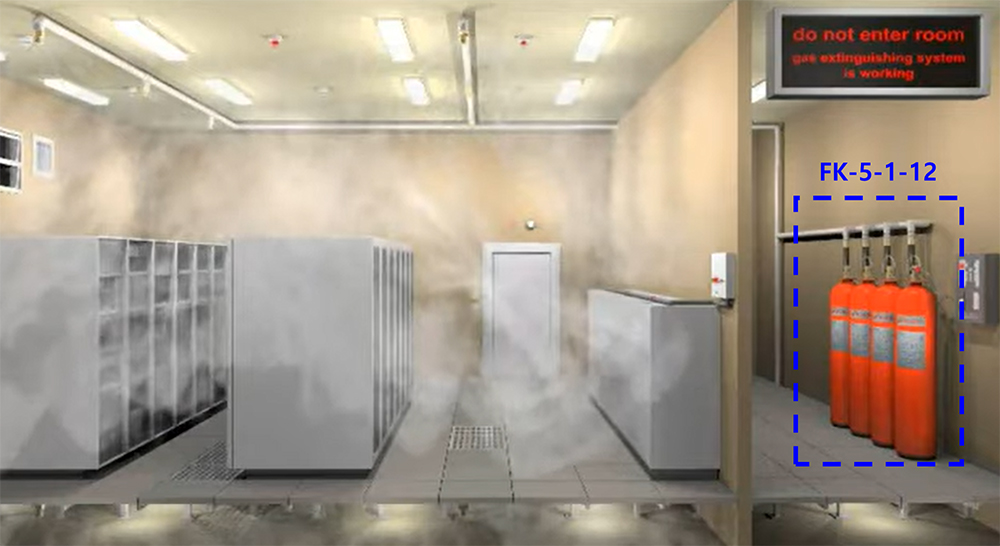
  • In accordance with the Fire Safety Performance Standards for Halogenated Compound and Inert Gas Fire Extinguishing Systems, the Company has adopted FK-5-1-12 (dodecafluoro-2-methylpentan-3-one) as a fire-extinguishing agent for shipboard fire suppression systems. This eco-friendly clean agent has an extremely low impact on ozone depletion and global warming and is safe for humans, significantly reducing the risks of environmental pollution and personal injury compared with conventional CO₂ systems.
  • This technology has been successfully applied to critical areas of various types of vessels, including the server room of a geophysical research vessel, the engine room of an oil tanker, and the battery charger room of a 3,000-ton-class Korea Coast Guard patrol vessel, demonstrating its effectiveness.

Technology for the Application of PFAS-Free Foam Fire-Extinguishing Agents

  • A technology that facilitates the transition to eco-friendly fire suppression systems while protecting marine ecosystems.
  • Foam fire-extinguishing agents conventionally used on maritime patrol vessels and pollution-control vessels contain PFOS (perfluorooctanesulfonic acid) and PFOA (perfluorooctanoic acid), persistent pollutants that do not readily break down in the natural environment. Concerns have continued to be raised regarding their potential to cause long-term pollution of marine ecosystems and accumulate in the human body through the food chain.
  • To fundamentally address these environmental concerns, the Company has developed technology that uses environmentally certified foam fire-extinguishing agents completely free of perfluorinated compounds (PFOS and PFOA). The technology maintains conventional fire suppression performance, including oxygen isolation, vapor suppression, and cooling effects, while significantly reducing the risk of environmental pollution, thereby achieving both marine environmental protection and effective fire suppression.

Application of Electric Sliding Watertight Doors
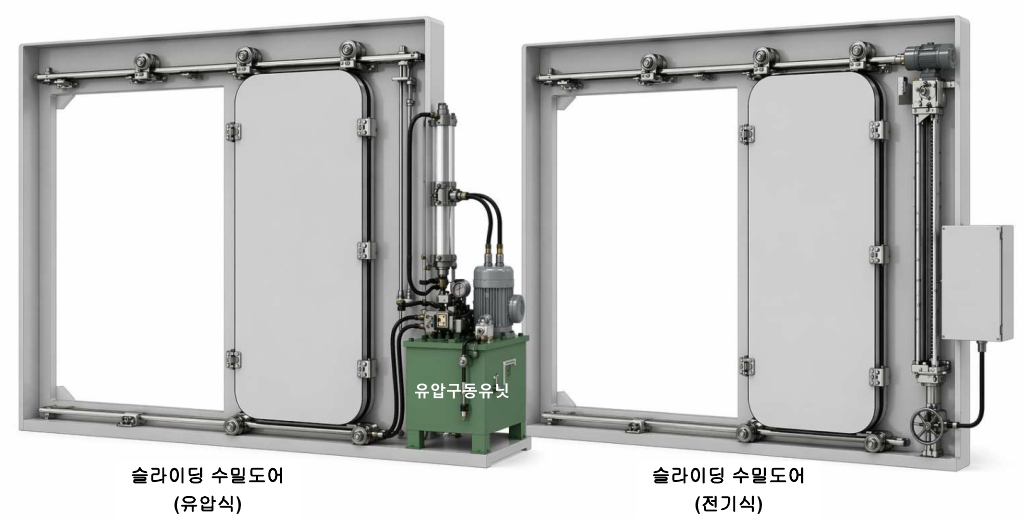
  • A next-generation electrically driven watertight door system that overcomes the limitations of conventional hydraulic systems.
  • Conventional hydraulically operated sliding watertight doors rely on hydraulic pumps and hydraulic oil, resulting in a range of operational issues, including environmental pollution and fire risks caused by oil leakage, disposal of waste oil generated during maintenance, and noise from hydraulic pump operation. To fundamentally address these structural limitations, the Company developed its own electrically driven sliding watertight door and applied it to a 3,000-ton-class Korea Coast Guard patrol vessel.
  • The new opening and closing system, which uses an electric motor and reduction gear, completely eliminates hydraulic pumps, piping, and hydraulic oil, thereby preventing slip accidents, fire risks, and marine pollution caused by oil leakage. It also eliminates waste oil generated from hydraulic oil replacement, enabling more environmentally friendly vessel operation. In addition, significantly reduced noise and vibration contribute to improving the onboard working environment.

Development of a VLAC (Very Large Ammonia Carrier)

  • Ammonia is an eco-friendly energy source that produces no carbon emissions during combustion. In addition to its widespread industrial applications, including fertilizers, refrigerants, and LCD panel manufacturing, it is attracting attention as a key feedstock for hydrogen production, a next-generation energy source, driving rapid growth in global demand.
  • To proactively respond to this market trend, the Company launched strategic development in May 2024 based on a market feasibility analysis. By August of the same year, it had completed the standard hull form, Outline Specification, Sketch General Arrangement, and standard commercial ship price estimation. Through this technology development, the Company is strengthening its competitiveness in securing newbuilding orders in the rapidly growing ammonia carrier market while enhancing its core technological capabilities in ammonia cargo transportation and dual-fuel propulsion systems.
  • Ammonia is toxic and corrosive and has greater expansion characteristics than conventional fuels such as LPG, requiring highly sealed tank designs and precise cargo management technologies. To meet these technical requirements, the Company has completed the development of a standard VLAC incorporating an optimized hull form and a Dual-Fuel Engine propulsion system capable of using both ammonia and conventional fuel oil.

Underwater Radiated Noise Control Technology
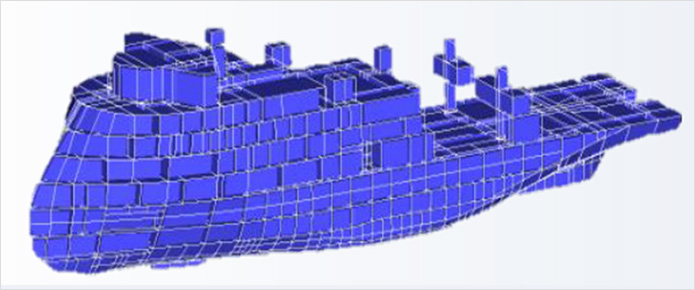
  • Underwater noise generated during vessel operation can adversely affect the marine environment by causing stress in marine organisms, disrupting reproduction, and reducing populations.
  • The Company has developed and applied underwater radiated noise reduction technology that meets DNV Silent-R and Silent-S requirements to a geophysical research vessel, thereby enhancing survey performance while promoting the sustainability of marine ecosystems and protecting the underwater environment.
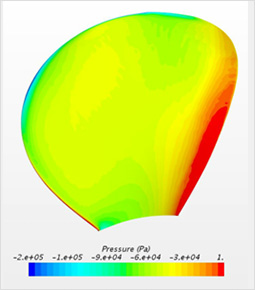
  • Through detailed numerical analysis, major noise sources were identified, and onboard vibration and noise were effectively reduced through structural improvements to the hull and the application of resilient mounts. A low-noise design was also introduced for the propeller, which has the greatest impact on underwater noise, and its low-noise performance was verified through sea trials.

Design Technology for an Eco-Friendly 8,500-TEU Container Ship Incorporating Carbon Capture & Storage (CCS)
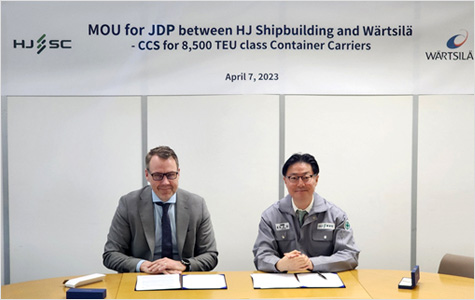
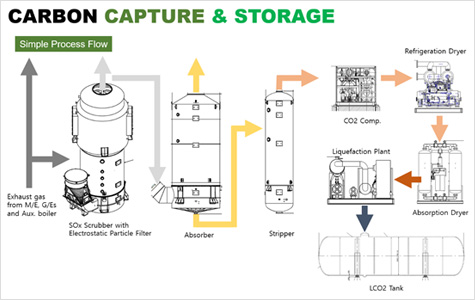
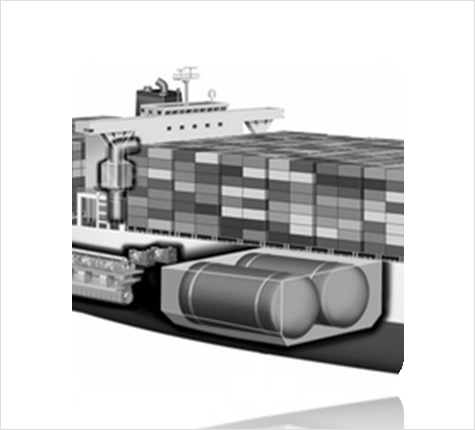
  • To proactively respond to increasingly stringent marine environmental regulations in line with the International Maritime Organization’s (IMO) goal of achieving net-zero greenhouse gas emissions by 2050, the Company conducted joint research under an MOU with Wärtsilä, a leading Finnish marine engine manufacturer, and successfully developed an eco-friendly 8,500-TEU container ship incorporating CCS (Carbon Capture & Storage) technology that captures CO₂ emitted from the vessel, stores it in liquid form, and enables its subsequent unloading.
  • Considering global fossil fuel consumption, CCS (Carbon Capture & Storage) will ultimately play a critical role in realistically achieving net-zero targets. The Global CCS Institute, a research organization specializing in carbon capture and storage, forecasts that the global CCS market will grow by more than 30% annually as countries pursue decarbonization policies, with annual CO₂ capture reaching 7.6 billion tons by 2050.
  • The Company is continuously developing related technologies to gain an early foothold in the CCS market. In particular, the newly developed CCS design technology for an 8,500-TEU container ship enables highly efficient CO₂ capture sufficient to comply with IMO regulations even when conventional petroleum-based fuel, rather than methanol, is used in the Company’s methanol-powered vessel of the same class. When applied to LNG- or methanol-fueled vessels, the technology can further reduce CO₂ emissions compared with conventional vessels.
  • The CCS system has also been optimized within the hull so that it does not affect the vessel’s existing cargo capacity, while the fuel required to operate the CCS system is minimized through energy-saving equipment.

Next-Generation Eco-Friendly Hybrid Propulsion Vessel
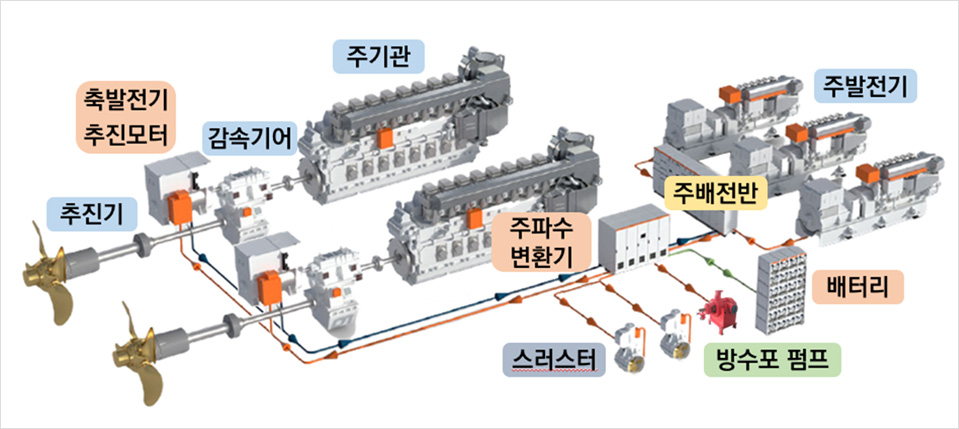
  • The Company secured an order from the South Sea Fisheries Management Service of the Ministry of Oceans and Fisheries for a 1,900-GT-class hybrid national fisheries patrol vessel. By applying a hybrid integrated propulsion operating concept and conducting extensive technical coordination with equipment manufacturers regarding propulsion system integration, the Company ensured operational suitability and stability while successfully developing an efficient hybrid propulsion system.
  • In addition to the conventional mechanical propulsion system, the eco-friendly vessel is equipped with a propulsion motor that also functions as a shaft generator. During short-distance operations of approximately 30–40 minutes, the vessel can operate using the battery-powered propulsion motor without running the engine. This improves energy efficiency and provides greater reductions in marine and air pollution than conventional propulsion systems.

* Applicable Vessels: 1,900-GT-Class Hybrid Eco-Friendly National Fisheries Patrol Vessels (3 vessels, S193/4/5)

Application of SCR (Selective Catalytic Reduction) to Reduce Nitrogen Oxides from Main Engines and Generators
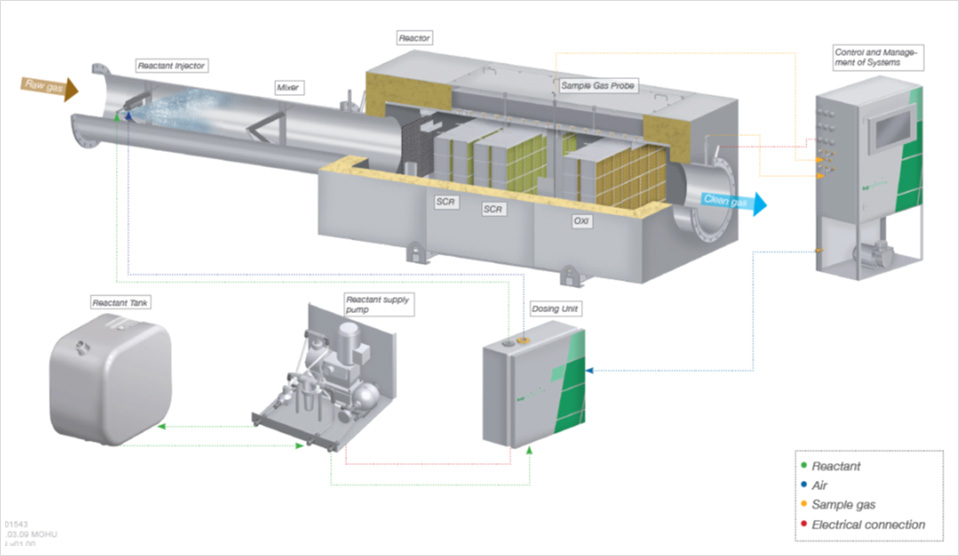
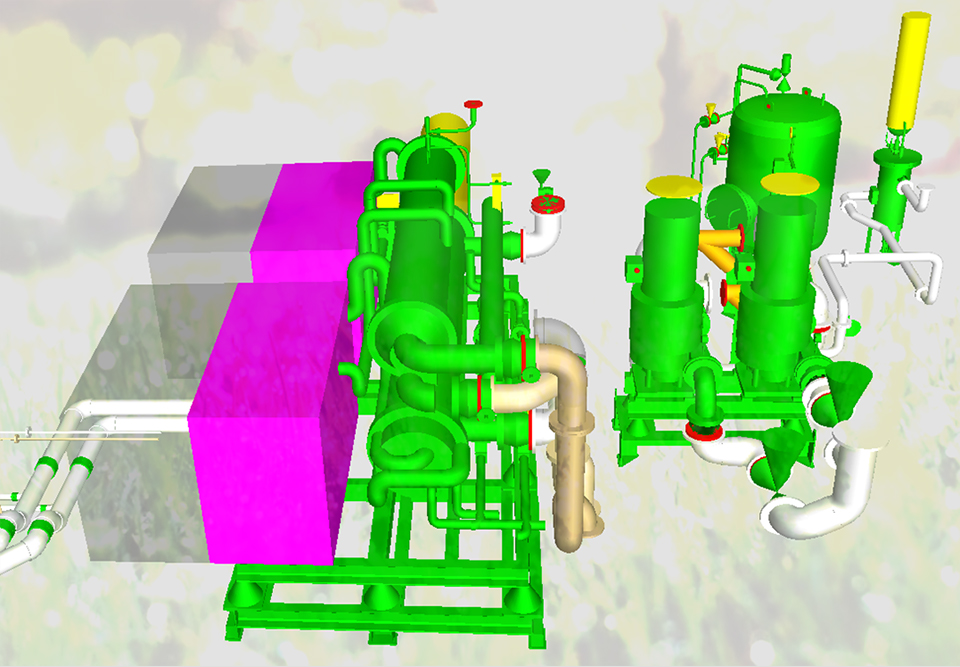
  • SCR is a system that injects an aqueous ammonia or urea solution into exhaust gas and converts pollutants into water (H₂O) and nitrogen (N₂) through a catalytic reaction, thereby reducing engine emissions and helping prevent air pollution.

* Applicable Vessels: Multipurpose Large Pollution-Control Vessel (S190) and 3D/4D Geophysical Research Vessel (S192)

LNG Dual-Fuel Propulsion Vessels and Methanol-Fueled Vessels
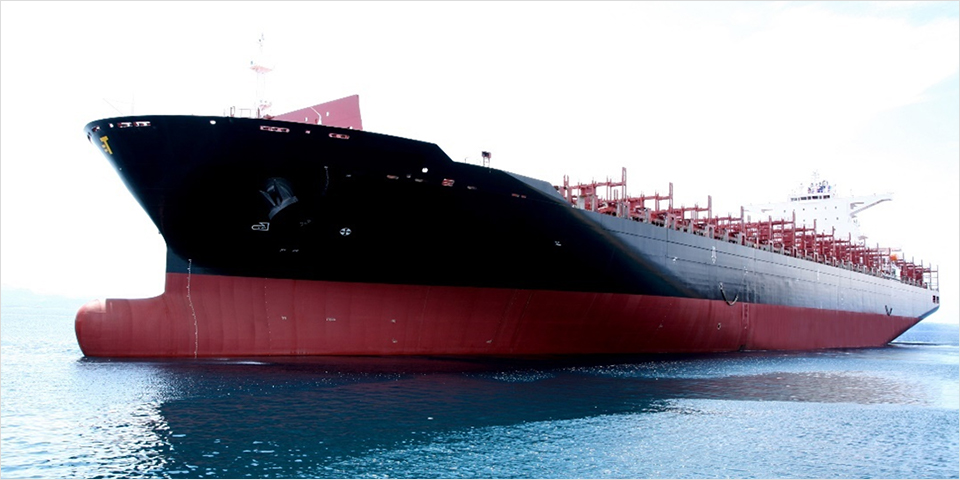
  • To comply with various environmental regulations, including IMO regulations on ship emissions (fuel oil sulfur content of 0.5% or less), accommodate diverse shipowner requirements, and respond to rapidly changing market demands, the Company has completed the development of construction technologies for high-efficiency, eco-friendly LNG-fueled vessels equipped with Dual Fuel (DF) engines that use both LNG and heavy fuel oil, as well as methanol-fueled vessels that use methanol, another eco-friendly fuel that offers easier temperature and pressure control and lower technical operating risks than LNG.
  • LNG Dual-Fuel Propulsion Vessels: Two Navios 7,700-TEU vessels, N282/3 Series
  • Methanol-Fueled Vessels: Six MPC 5,500-TEU vessels, N274/5/6/7/8/9 Series; two HMM 9,000-TEU vessels, N284/5 Series

5K LNG Bunkering Vessel

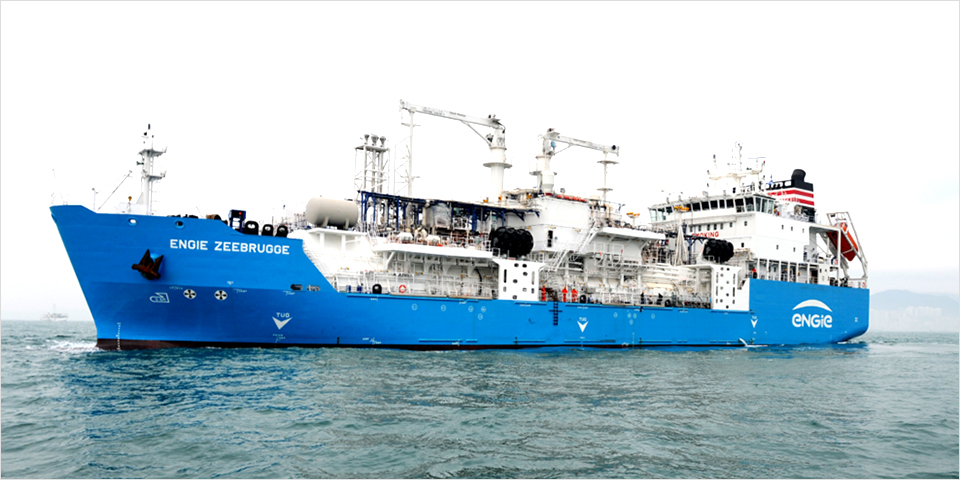
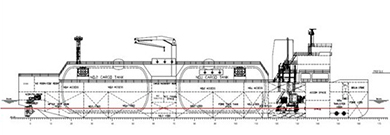
  • Anticipating growing market demand for small LNG supply vessels capable of supplying LNG fuel to ships as the use of environmentally friendly LNG-fueled vessels increases, the Company has completed the development of construction technology for a 5K-class LNG carrier/bunkering vessel.
  • Core Technologies: Onboard LNG bunkering equipment for supplying LNG fuel to other vessels, hull control technology for a narrow hull form, and optimized design technology for the arrangement of various systems.

Intelligent Automatic Blasting Equipment for Hull Outer Plates
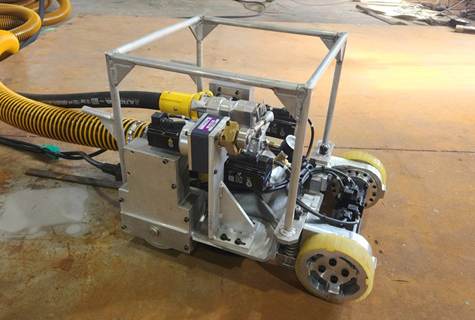
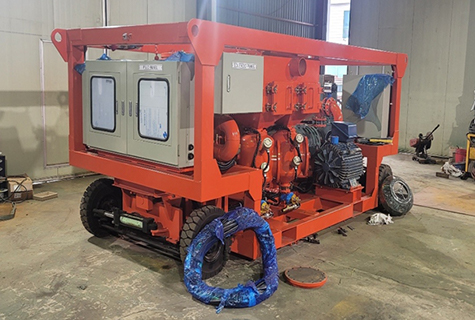
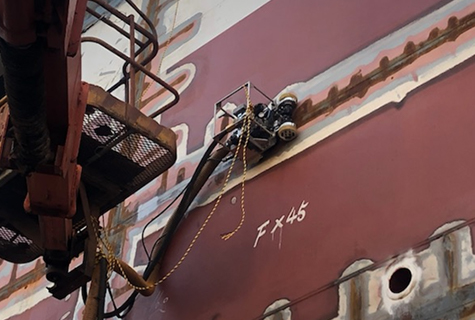
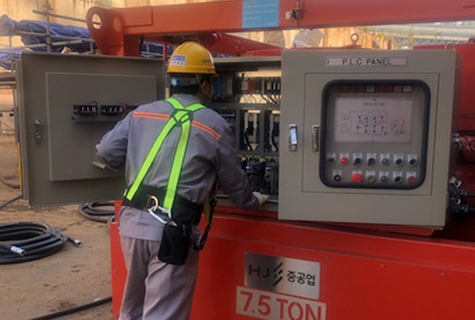
  • An eco-friendly automated system that improves surface preparation quality, reduces working time, and minimizes workplace environmental pollution during surface treatment for ensuring coating quality and removing contaminants from steel plates during ship construction.
    • During surface preparation to ensure coating quality and remove contaminants from steel plates during hull construction, the Company developed an advanced automated blasting robot system for hull outer plates to address the limitations of conventional manual grinding and open blasting and improve work efficiency. The system has been applied to pre-coating surface preparation work at the Dock Stage and GPE area.

Development of New 7.5K LNG Bunkering Vessel (LBV)

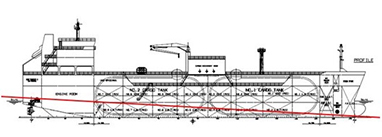
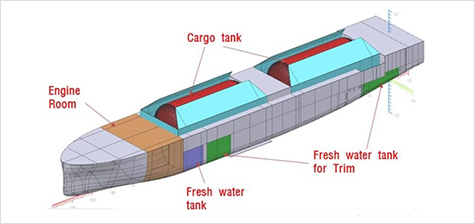
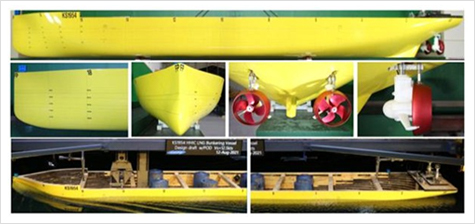
  • The Company developed a new 7.5K LNG Bunkering Vessel (LBV) featuring a design that positions the machinery space at the bow, thereby shifting the vessel’s center of gravity forward to maintain equilibrium even under lightship conditions. To maintain equilibrium in both empty and loaded conditions, freshwater tanks for trim adjustment are used instead of conventional ballast water tanks. The vessel incorporates ballast-water-free technology and features a new hull form (with the accommodation area and machinery space located at the bow). The basic design of the vessel has received Approval in Principle (AIP) from Lloyd’s Register (LR).
Category Engine Room at Stern Engine Room at Bow
Lightship Condition by Engine Room Location

Conceptual Study on Conversion to LPG-Fueled Propulsion
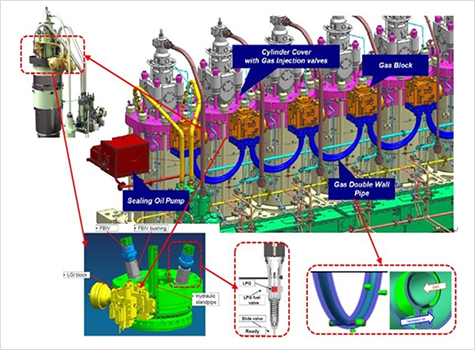
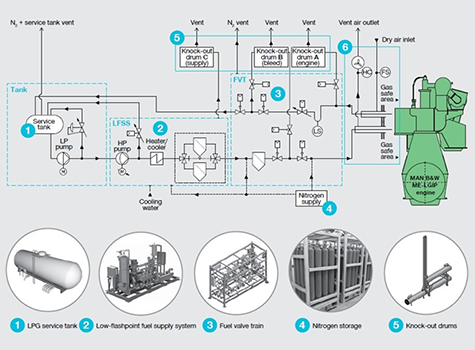
  • To respond to IMO environmental regulations on ship emissions (the requirement that fuel oil sulfur content not exceed 0.5%), the Company carried out a development project for core design technologies required to convert associated systems so that LPG, an eco-friendly fuel that is easier to store and offers lower conversion costs than LNG, can be used as a marine propulsion fuel.
    • IGC/IGF Codes related to LPG-fueled vessels, LPG-fueled engines, LPG fuel supply systems, etc.

SOx Scrubber Retrofit

  • Technology for installing or retrofitting a desulfurization system (SOx scrubber) in the exhaust system of existing vessels using bunker C fuel to comply with IMO environmental regulations on ship emissions (the 0.5% sulfur limit for fuel oil).

Research on Ballast-Water-Free Vessel Technology
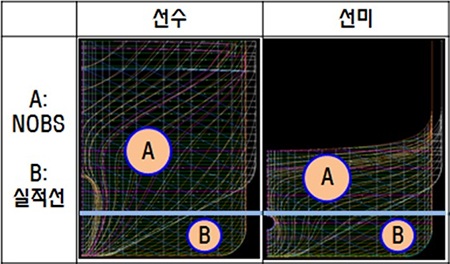
  • To address marine pollution caused by ship ballast water and increasingly stringent IMO international regulations (under the Ballast Water Management Convention), the Company sought a more fundamental solution than the conventional installation of Ballast Water Management Systems (BWMS). Through participation in multi-year government-funded projects and research, the Company completed the development of an eco-friendly 7,500 m³-class LNG bunkering vessel employing a ‘ballast-water-free’ concept that ensures vessel stability and safe operation without the intake or discharge of ballast water.

Ballast Water Treatment System

  • Ballast water is discharged to maintain vessel stability during cargo loading and unloading. The Company applies a treatment system that uses UV sterilization and fine filtration before discharge to remove suspended matter and foreign substances from onboard ballast water, thereby minimizing its impact on marine ecosystems.

Application of Eco-Friendly Antifreeze

  • Ethylene glycol, commonly used as antifreeze to prevent freezing of ship cooling water, is colorless and odorless and therefore requires careful handling. According to its Material Safety Data Sheet (MSDS), it is a hazardous substance that may cause neurological damage through skin contact or inhalation. Accordingly, the Company uses propylene glycol, an eco-friendly antifreeze that is harmless to humans and is also used as a food additive, as an alternative substance in chilled-water production units for air-conditioning systems located in close proximity to onboard accommodation areas.

Development of a Low-Carbon Container Ship with a Type C Tank and LNG-Fueled Propulsion (In Progress)
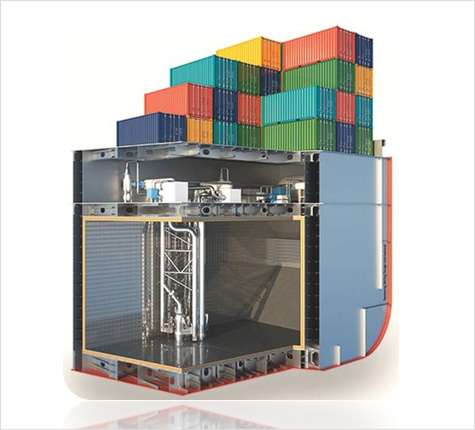
  • In response to increasing demand for eco-friendly gas-fueled vessels resulting from the IMO’s strengthened sulfur oxide (SOx) emission regulations, the Company is proactively developing technology for the application of independent Type C fuel tanks.
  • Type C tanks are cylindrical or spherical pressure vessels with a design pressure of 2 bar or higher. They offer high operational efficiency and ease of maintenance and have the advantage of requiring no separate secondary barrier.
  • Compared with membrane-type tanks, they also provide lower manufacturing costs and greater strength, ensuring both economic efficiency and structural stability, while offering the versatility required for application to various types of vessels.
  • Type C fuel tank technology provides a solution that enables the Company to proactively respond to the eco-friendly container ship market. Through this technology, the Company plans to expand newbuilding orders while securing greater price competitiveness compared with LNG fuel tank alternatives.

Conventional Membrane Type

Type C Tank

Development of Eco-Friendly Composite Materials and Components for Rotor Sails on Large Cargo Ships to Reduce Carbon Emissions (Participation in a Government-Funded Project in Progress)

  • As international marine environmental regulations continue to become more stringent, securing self-reliant technologies for core eco-friendly materials that reduce carbon emissions has become increasingly important throughout the shipbuilding industry.
  • Against this backdrop, the development of rotor sails based on lightweight, eco-friendly composite materials incorporating Natural Fiber Reinforced Polymer (NFRP) is gaining attention as an effective alternative for improving vessel fuel efficiency and significantly reducing greenhouse gas emissions.
  • The Company is participating in a government-led technology development project aimed at replacing CFRP and GFRP, which are commonly used for conventional rotor sail components, with NFRP, an eco-friendly alternative material. Through this initiative, the Company seeks to accelerate the green transition of the marine equipment industry and contribute to building a sustainable marine industrial ecosystem.

Conceptual Design Development of an Eco-Friendly Ammonia-Fueled Vessel (Government-Funded Project Being Pursued)

  • The Company is pursuing participation in a government-funded project and related development with the aim of developing a conceptual design for an eco-friendly ammonia-fueled vessel using ammonia, one of the zero-carbon fuels capable of meeting IMO and EU environmental regulations, and obtaining Approval in Principle (AIP) from a classification society.

Safety Standards for Marine Hydrogen Storage Vessels and Fuel Supply Systems (Industry-Academia Joint Development Planned)
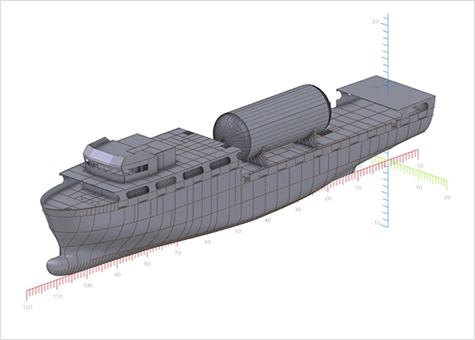
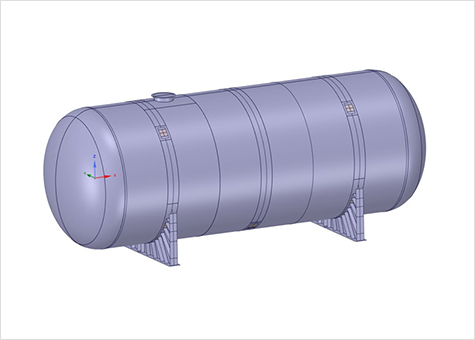
  • In response to increasingly stringent regulations on ship emissions, particularly carbon dioxide emissions, the Company is developing safety standards by identifying potential issues associated with the use of hydrogen as a zero-carbon fuel and assessing the suitability of storage vessels for liquid, gaseous, and solid hydrogen through research into the structural and material properties required for such vessels.

Development of a Marine Waste Collection and Treatment Vessel Using Hydrogen Technology (Industry-Academia Collaborative Technology Development Project)

  • The Company completed the development of an integrated technology for an eco-friendly vessel designed to collect and treat floating marine waste. The technology uses the cold energy generated during LNG vaporization to cryogenically freeze and crush floating marine plastics. It also produces hydrogen from natural gas using a dual-fuel engine capable of operating on both natural gas and conventional fuel oil, and uses the hydrogen in fuel cells to generate electricity that can be supplied to and controlled for the propulsion motors and accommodation areas.

Underground Rainwater Utilization Facility Technology Comprising Prefabricated Synthetic-Resin Tunnel Boxes and Manhole-Type Pretreatment Tanks

  • Green Technology Certification No. GT-22-01406