

HJ중공업


Sustainability

Beyond Today’s Value,
Toward the Future

Sustainability

Fulfilling Our Economic and Social Responsibilities
for Sustainable Growth

Social Contribution

Social Contribution Policy

Results of Community Risk Identification and Assessment at Domestic Project Sites

HJ Shipbuilding & Construction systematically identifies and assesses potential community risks arising from its business operations and implements preventive management activities based on the level of impact and likelihood of occurrence.
For major risk factors closely related to residents’ daily lives, such as traffic safety, falling objects, noise, and fugitive dust, the Company establishes and implements risk-specific mitigation measures and response systems to minimize impacts on local communities and strengthen the foundation for mutual growth.

Indicator Risk Factor Likelihood Impact Level Mitigation Measures
Traffic Safety
  • Potential safety accidents involving pedestrians, such as collisions or entrapment, during the rotation and operation of construction equipment such as excavators
  • Potential road subsidence or damage caused by the weight of heavy equipment, posing risks to community safety
Low High
  • Deploy traffic controllers at site entrances and exits and install pedestrian safety facilities
  • Conduct regular safety training for equipment operators at least once a week
  • Conduct periodic inspections and repairs in areas at risk of damage, including areas near temporary storage yards
Falling Objects
  • Potential damage to vehicles and pedestrians caused by falling objects during construction
Low High
  • Install falling-object prevention nets in pedestrian areas
  • Implement compensation procedures for medical expenses, repair costs, and other damages in the event of an accident
Clogged Drainage Channels
  • Potential community safety issues caused by clogged drainage during rainfall, including overflowing drainage channels and disruption to vehicle and pedestrian traffic
Medium Low
  • Conduct regular inspections and cleaning of drainage channels to maintain proper drainage functions
Fugitive Dust
  • Potential generation of fugitive dust due to strong winds and the movement of equipment (cargo cranes, etc.)
  • Potential adverse impacts on nearby residents and the living environment
Medium Low
  • Strengthen fugitive dust control measures, including the use of covers and water spraying
  • Operate dust prevention screens and wheel-washing facilities
  • Operate measurement and monitoring systems, including real-time fine dust display boards
Biodiversity
  • Potential decline in populations and disruption of ecosystems if habitats of the narrow-mouthed toad, a Natural Monument, are damaged
Medium Medium
  • Relocate habitats in accordance with applicable laws and procedures
  • Ensure the effectiveness of conservation activities through continuous monitoring
Noise
  • Potential for construction noise to exceed applicable environmental noise limits
  • Potential adverse impacts on the living environment of local residents
Medium Medium
  • Conduct regular noise measurements and maintain records
  • Install additional noise reduction facilities, such as portable noise barriers, as necessary to minimize noise
Water Quality
  • Potential discharge of contaminated water onto adjacent roads due to overflowing drainage channels and sedimentation basins
  • Potential water pollution caused by malfunctioning wastewater discharge facilities
Low Low
  • Conduct periodic cleaning of individual sewage treatment facilities and drainage systems
  • Install silt curtains to minimize the discharge of sediment and pollutants
Property Rights Infringement
  • Potential disruption to nearby businesses due to construction noise and dust
  • Potential damage to adjacent facilities, including cracks, peeling, leaks, and exterior damage
Medium Low
  • Conduct preliminary surveys of adjacent facilities before construction begins
  • Promptly respond to complaints and seek solutions through consultation when complaints arise
  • Strengthen community communication through ongoing engagement with nearby residents
Psychological Harm
  • Potential stress and psychological discomfort among local residents due to construction noise, vibration, and dust
High Low
  • Respond to complaints and seek solutions through consultation when complaints arise
  • Consider compensation for psychological harm in accordance with applicable procedures, where necessary
Waste
  • Potential environmental pollution caused by illegal dumping and improper waste segregation
Low Low
  • Ensure construction waste is properly segregated and stored by type and appropriately transported off-site
  • Manage the separate storage and disposal of general waste and recyclables

Regional Status

A total of 95 risk factors were identified at 27 of the Company’s 63 project sites nationwide (excluding overseas project sites).

Regional Status Number of Applicable Project Sites [Unit: sites]
Gangwon 3
Gyeonggi 12
Busan 2
Sejong 1
Suwon 1
Ulsan 1
Incheon 1
Jeonnam 2
Jeju 1
Chungnam 3
Total Total 27 sites

Likelihood Assessment Criteria

Category Details
High Occurs at least once a month or repeatedly
Medium Occurs approximately once a year
Low No previous cases or isolated occurrence

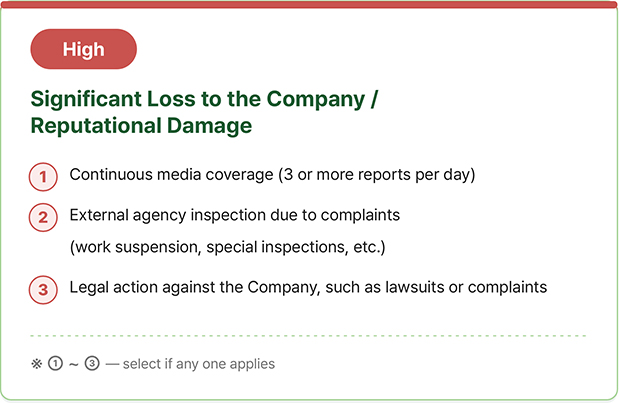
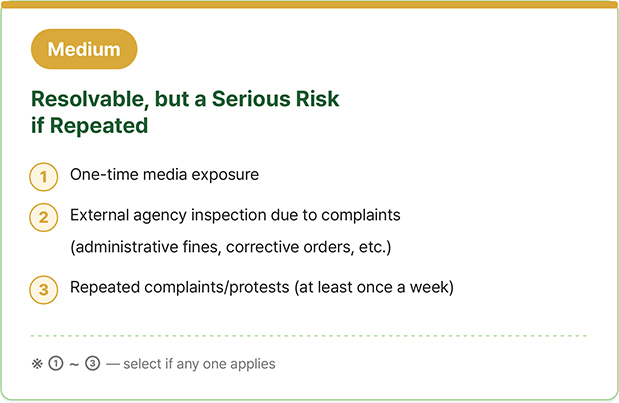
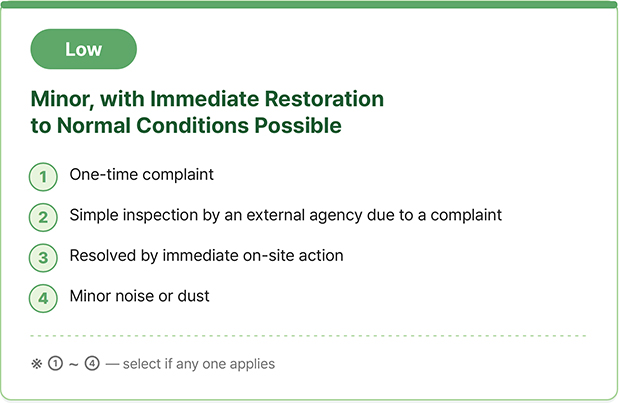
Impact Assessment Criteria

[Unit: cases]

Indicator Total Cases Likelihood Impact Level Effectiveness Assessment
Low Medium High Low Medium High Low Medium High
Traffic Safety 22 11 4 7 8 5 9 - 15 7
Falling Objects 3 2 - 1 - 1 2 - 2 1
Clogged Drainage Channels 1 - 1 - 1 - - - - 1
Fugitive Dust 21 3 14 4 11 10 - - 17 4
Biodiversity 1 - 1 - - 1 - - - 1
Noise 11 3 6 2 4 6 1 - 6 5
Water Quality 7 6 1 - 6 1 - - - 7
Property Rights Infringement 8 3 4 1 5 3 - - 5 3
Psychological Harm 10 2 - 8 8 2 - - 6 4
Waste 11 9 2 - 6 - 5 - 2 9
Total 95 39 33 23 49 29 17 0 53 42

Effectiveness Assessment of Community Risk Management Activities

HJ Shipbuilding & Construction conducted community risk management activities at 27 project sites nationwide, identifying a total of 95 risk factors. The Company subsequently conducted an assessment to evaluate the effectiveness of the mitigation measures implemented for these risks.

Category Effectiveness Assessment Details Remarks
High 42
  • Risk factors fundamentally eliminated
  • No signs of the same or similar risks identified during follow-up inspections
No additional follow-up measures required
Medium 53
  • Same risk eliminated, but similar risks remain
  • Reduction in risk level confirmed following mitigation measures
Continuous management required
Low 0
  • High likelihood of recurrence of the same risk factor even after mitigation measures
  • Risk factors repeatedly identified
Additional fundamental measures required